
Some destinations are famous for one thing. Saint Lucia is difficult to define so simply.
This small Eastern Caribbean island brings together volcanic mountains, tropical rainforest, beaches, Creole culture, luxury hospitality and a remarkably strong sense of identity within just 27 miles of land from north to south.
It is already internationally recognised. Saint Lucia’s official tourism authority currently highlights the island as Expedia’s #1 destination on its 2026 Island Hot List, alongside recognition from Tripadvisor and the World Travel Awards. Yet compared with many of the world’s most heavily visited island destinations, Saint Lucia still has places where the experience feels remarkably intimate.
Here are five reasons Saint Lucia deserves to be considered one of the world’s hidden gems.
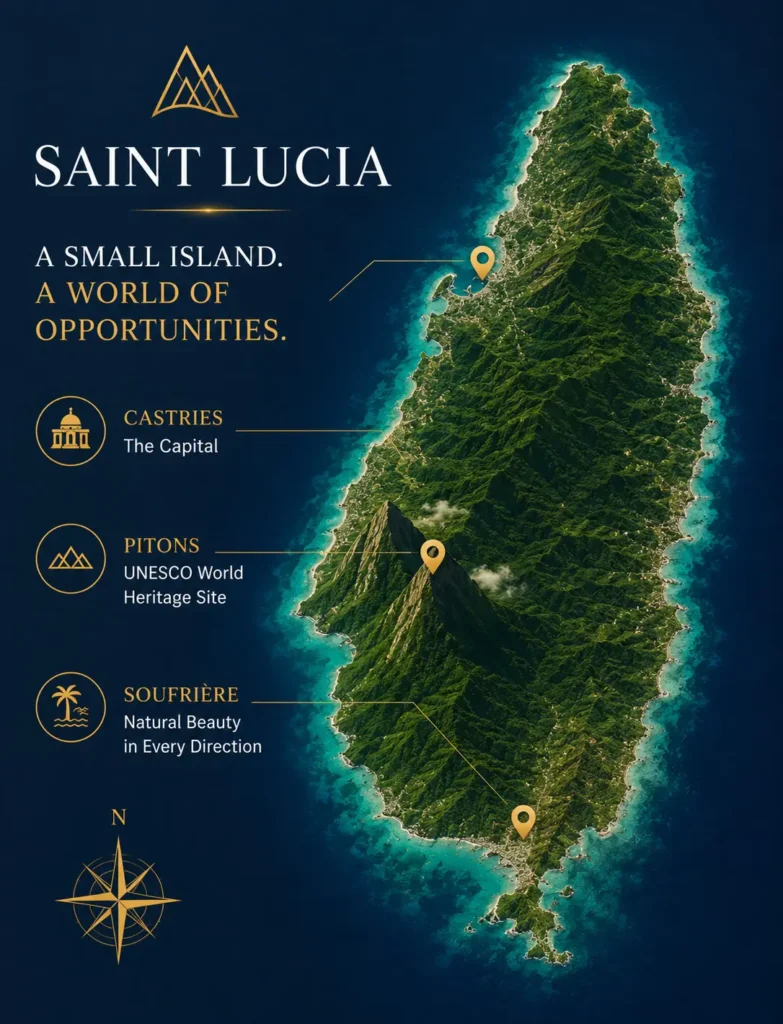
1. Its Landscape Is Unlike Almost Anywhere Else in the Caribbean
The first thing that separates Saint Lucia from the traditional image of a Caribbean island is its geography.
The island is volcanic and mountainous, with rainforest-covered interiors, valleys, waterfalls and a coastline that shifts between golden beaches, volcanic dark-sand coves and dramatic cliffs.
At the centre of that identity are Gros Piton and Petit Piton, Saint Lucia’s famous twin volcanic peaks.
The Pitons Management Area has been a UNESCO World Heritage Site since 2004. Gros Piton rises approximately 770 metres above sea level, while Petit Piton reaches 743 metres. But the UNESCO site extends far beyond the two peaks. It encompasses 2,909 hectares of volcanic terrain and marine habitat, with coral reefs covering more than 60% of its marine area.
It means a day in Saint Lucia can begin hiking through rainforest and end swimming or snorkelling beneath volcanic mountains.
That combination is difficult to replicate.
2. You Can Experience a Volcano, Rainforest and Caribbean Sea in the Same Day
Saint Lucia rewards travellers who want more than a resort holiday.
Near Soufrière, Sulphur Springs provides one of the island’s most unusual experiences. Located within an ancient volcanic landscape, the geothermal area contains steaming vents, bubbling mud pools and mineral-rich springs. It is commonly described as the Caribbean’s only “drive-in volcano”, as visitors can travel directly into the geothermal area.
Move inland and the landscape changes again.
Saint Lucia’s rainforest trails lead through dense tropical vegetation, rivers and waterfalls. Trails range from relatively accessible nature walks to the more demanding Gros Piton climb.
Then there is the coastline.
Anse Chastanet, Anse Mamin and Anse Cochon offer volcanic dark-sand beaches, while Sugar Beach sits dramatically between the two Pitons. Several of these areas also provide direct access to coral reefs and marine life.
Few islands pack this much natural variety into such a small area.
3. Its Culture Has Remained Distinctly Saint Lucian
Beautiful scenery attracts visitors. Culture is often what makes them remember a place.
Saint Lucia has developed a distinctive Creole identity shaped by African, Caribbean, French and British influences.
English is the official language, while Saint Lucian Creole, or Kwéyòl, remains widely spoken. French influence can still be found in place names, language, cuisine and traditions. That heritage is celebrated through music, storytelling, markets, food and major events such as Jounen Kwéyòl, Saint Lucia Carnival and the Saint Lucia Jazz & Arts Festival.
Food provides another window into that identity. Local traditions range from green fig and saltfish to Creole seafood, cassava bread, tropical produce and locally grown cacao. Visitors can even follow cacao from the plantation to finished chocolate through the island’s bean-to-bar experiences.
And for a country of its size, Saint Lucia has made an extraordinary intellectual contribution to the world.
It is the birthplace of two Nobel laureates: economist Sir Arthur Lewis and poet and playwright Derek Walcott.
Saint Lucia may be small geographically, but its cultural footprint is anything but small.
4. It Offers Luxury Without Losing Its Sense of Place
There is another reason Saint Lucia stands apart: development has not completely separated visitors from the landscape and communities that make the island special.
Luxury resorts and private villas coexist with fishing villages, local markets, cocoa estates, rainforest trails and secluded beaches.
Travellers can experience the polished side of Rodney Bay or a luxury retreat near the Pitons, then explore historic Pigeon Island, visit a local market, walk through Soufrière or find quieter coastal communities elsewhere on the island.
Even the island’s most internationally recognised landscape is subject to significant conservation controls. In 2025, UNESCO noted that recommendations designed to protect the outstanding universal value of the Pitons Management Area had been incorporated into Saint Lucia’s planning framework through a legally binding statutory instrument.
That balance matters.
The appeal of Saint Lucia is not simply that it has luxury. It is that luxury exists alongside a landscape and culture that still feel unmistakably Saint Lucian.
5. It Feels Remote Without Being Disconnected
A true hidden gem should feel like an escape. It should not necessarily be difficult to reach.
Saint Lucia manages both.
Despite being only around 27 miles long and 14 miles wide, the island has direct air connections with major international markets. Current services include direct flights from cities such as Miami, New York, Boston, Atlanta and Toronto, alongside connections from the UK, Europe and elsewhere in the Caribbean.
Once on the island, however, the atmosphere can feel considerably further removed from major global cities.
There are quiet fishing communities, rainforest-covered mountains, small bays and relatively secluded stretches of coastline. Saint Lucia’s east coast, for example, remains less developed than the busier tourism areas and is characterised by rugged Atlantic scenery and smaller communities.
That creates an increasingly valuable combination: international connectivity without sacrificing the feeling of escape.
A Small Island With Serious Global Appeal
Perhaps the best way to understand Saint Lucia is not by asking what it has, but how much it manages to bring together.
UNESCO-listed natural beauty. Volcanic landscapes. Rainforests and coral reefs. Creole culture. Internationally recognised hospitality. Global connectivity. And communities that continue to give the island its own character.
Saint Lucia does not need to be the biggest destination in the Caribbean to stand out.
In many ways, its scale is part of the appeal.
For travellers, families and internationally minded individuals looking beyond the world’s most obvious destinations, Saint Lucia offers something increasingly difficult to find: a place that is globally connected while still feeling distinctly its own.
Sometimes the world’s most interesting destinations are not the ones making the most noise. They are the ones quietly giving people more reasons to stay.